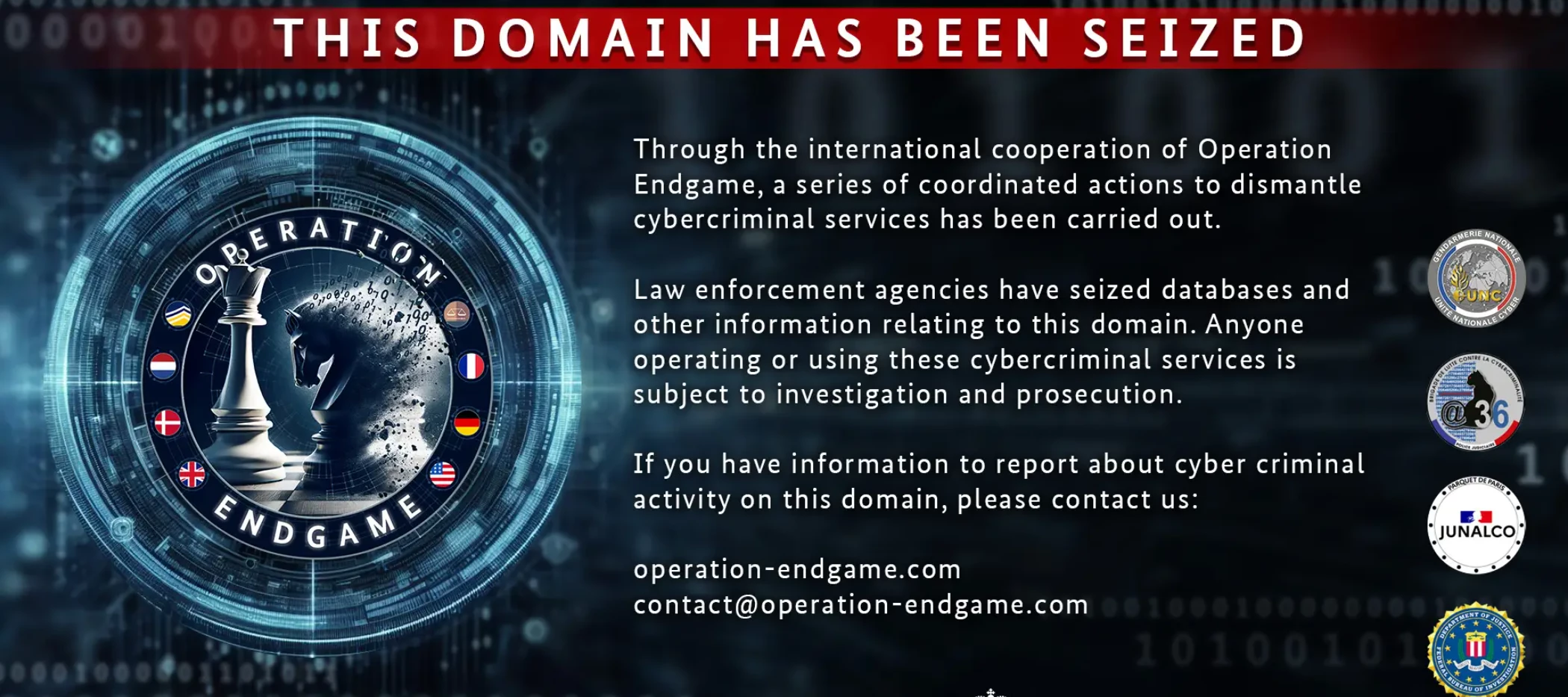



This week, international law enforcement delivered a major blow to cybercrime infrastructure in what may be the most ambitious anti-ransomware operation to date: Operation Endgame.
Led by Europol with support from the U.S. Department of Justice, FBI, Eurojust, and law enforcement agencies across Europe, the operation disrupted the backend infrastructure for multiple high-profile malware strains used to gain initial access in ransomware campaigns.
What Happened?
Over a four-day coordinated effort (May 19–22, 2025), authorities:
-
Dismantled 300+ servers across multiple countries
-
Neutralized over 650 domains used to distribute malware
-
Seized €3.5 million in cryptocurrency
-
Issued 20 international arrest warrants
-
Identified 37 suspects, with 18 added to the EU's Most Wanted list
The operation specifically targeted the initial access phase of the ransomware kill chain, disrupting the malware loaders and backdoors that ransomware groups depend on to infiltrate networks.
Malware Families Targeted
The takedown focused on some of the most prolific access-enabling malware tools used by ransomware affiliates:
-
QakBot – Originally a banking trojan, later adapted for modular payload delivery
-
DanaBot – Malware-as-a-service platform tied to ransomware, credential theft, and espionage
-
TrickBot – Notorious for its resilience, modular design, and connection to Ryuk and Conti ransomware
-
Bumblebee, Lactrodectus, HijackLoader, WarmCookie – Emerging threats used by access brokers in phishing and loader chains
Why This Matters
🔹 Shift in Strategy: Rather than chase individual ransomware strains, this operation strikes at the infrastructure layer—disrupting the ecosystem ransomware operators rely on.
🔹 Global Collaboration Works: With law enforcement from 7+ nations acting in coordination, it sends a clear message to cybercriminals: infrastructure is no longer safe.
🔹 Malware Is the On-Ramp: Disrupting these tools forces threat actors to rebuild trust, infrastructure, and evasion techniques - creating friction at scale.
Expert Take: Why Initial Access Is the New Battleground
At OpenText Cybersecurity, we’ve long emphasized that initial access is the linchpin of modern ransomware operations. Malware loaders, phishing lures, and compromised credentials often precede the deployment of ransomware payloads.
Operation Endgame validates that approach. By focusing on the front of the kill chain, authorities can create ripple effects that slow, or even stall the entire affiliate operations.
What Organizations Should Do Now
-
Rethink Threat Models: If you’re still primarily defending against payloads, it’s time to move left in the kill chain.
-
Harden Email and Endpoint Protections: Malware like DanaBot and TrickBot typically arrive via phishing or drive-by downloads.
-
Use Threat Intelligence Actively: Understand the TTPs behind these loaders and detect lateral movement patterns early.
-
Prepare for Retaliation: Whenever law enforcement takes down infrastructure, expect ransomware groups to strike back with new tactics or opportunistic exploits.